
Keeping young trees alive through a dry spell
Practical irrigation guidance for growers...

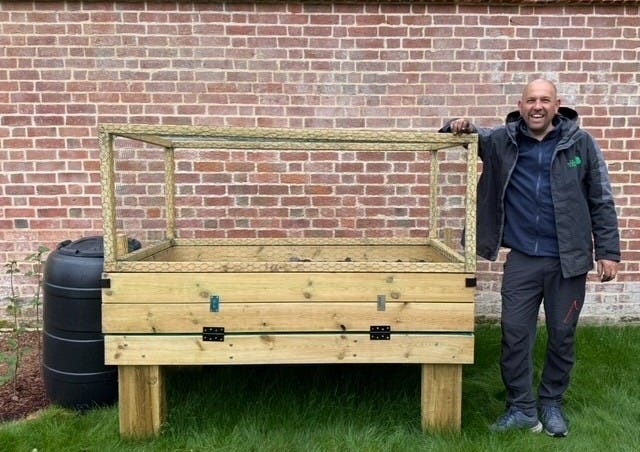
With weather swinging from heavy rain to sudden heat, consistent irrigation is now one of the most important actions for anyone raising young trees. Here’s how to get it right.
After a run of unpredictable weather — saturated ground one week, bone‑dry conditions the next — many schools and community nurseries are discovering just how quickly young trees can suffer. Saplings in pots are especially vulnerable: they dry out faster, heat up more quickly, and rely entirely on us for their water supply.
But raised beds and in‑ground plantings aren’t immune either. Beds can crust over, shedding water before it penetrates, and young trees in the ground often struggle when roots haven’t yet spread deeply enough to find moisture.
For anyone involved in The Tree Council’s Growing Together programme, kindly sponsored by our partners M&G plc, or simply caring for young trees at home or in a community space, now is the moment to get irrigation sorted before the next hot spell arrives.
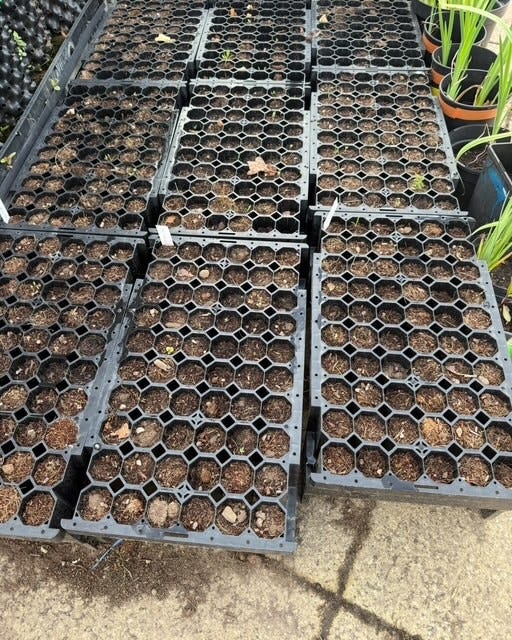
This guide offers practical, no‑nonsense advice on choosing, installing, and maintaining irrigation systems that keep young trees healthy through the summer — whether they’re in pots, raised beds, or planted directly in the ground.
Understanding your water demand
Effective irrigation starts with knowing how much water your trees actually need. Young trees in containers can go from moist to dangerously dry in under 24 hours during warm, windy weather. Raised beds dry more slowly but can still lose moisture rapidly in full sun. In‑ground trees depend heavily on soil type: sandy soils drain fast, clay soils crack and repel water, and loams sit somewhere in between.
A quick assessment helps you avoid both underwatering and waste:
Count your pots, beds, or planted areas — scale determines the system.
Check pot or bed size — larger volumes hold more moisture but require more water to saturate.
Assess exposure — full sun, concrete yards, and wind increase evaporation dramatically.
Consider species — willow, alder, and poplar drink heavily; oak, hornbeam, and fruit trees are more moderate.
Know your soil — sandy = frequent watering; clay = slower but harder to re‑wet; loam = most forgiving.
Once you understand your demand, you can match it to the right irrigation method rather than relying on guesswork.
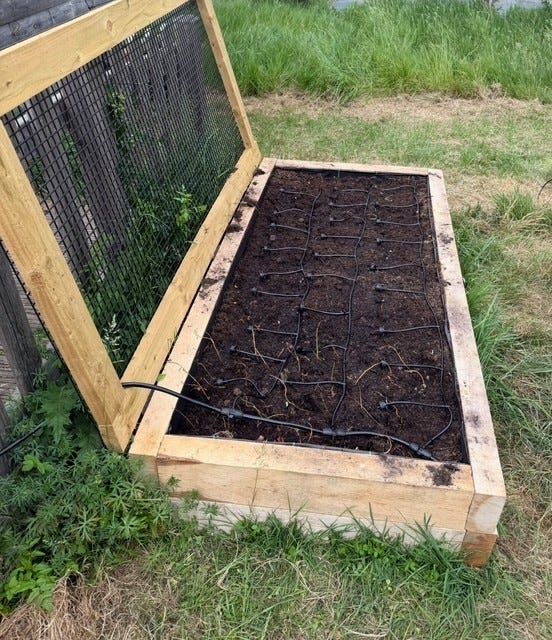
Choosing the right irrigation system
Different nursery sizes and planting styles benefit from different approaches. The aim is always the same: consistent moisture, minimal waste, and reduced labour.
Small setups (up to 20 pots or a single raised bed)
A hose with a spray head or a simple battery‑powered timer connected to a tap works well. Add a splitter if you want to run a short drip line. For raised beds, a small length of dripline or a micro‑sprayer ring gives even coverage. Cheap, flexible, and easy to adjust.
Medium setups (20–150 pots, multiple raised beds, or a small in‑ground nursery)
A drip‑line system is ideal. Slow, steady watering directly to each pot or bed keeps moisture levels stable. For in‑ground trees, a drip ring or two emitters per tree ensures water reaches the root zone rather than evaporating at the surface. A single 13mm main line with 4mm drippers branching off is usually enough. Add a timer and you’ve got a reliable, low‑maintenance system.
Large setups (150+ pots, multiple beds, or a full community nursery)
A manifold or multi‑zone system is best, especially if your nursery spans multiple areas. Zones let you tailor watering to species groups, soil types, or sun exposure. Off‑grid sites increasingly use solar irrigation controllers paired with IBC tanks — a strong option for schools and community orchards without easy access to mains water.
Securing a reliable water source
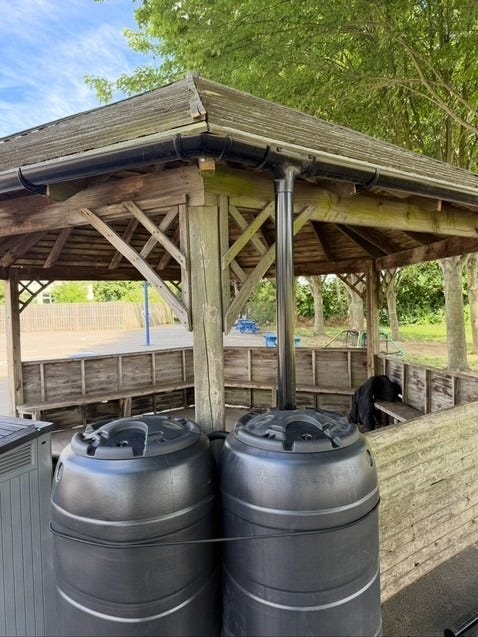
Tap water is convenient and reliable, but many prefer rainwater due to the energy consumption and chemicals that go into making tap water safe to drink. In addition, many community nursery sites don’t have mains water and so rely on stored rainwater.
Common options include:
IBC tanks fed by roof runoff
Rainwater harvesting from sheds, classrooms, or polytunnels
Solar pumps to move water from storage to irrigation lines
If you’re using stored water, raise the tank slightly. Gravity alone can power a small drip system, and solar pumps can handle larger setups without needing mains electricity.
Installation: the details matter
A well‑installed system saves hours of troubleshooting later. Key points:
Keep the main line straight and secure to maintain even pressure.
Use proper irrigation connectors — they’re designed for UV exposure and pressure.
Flush the system before first use to clear debris.
Test every dripper — one blocked dripper can kill a tree in a hot week.
Anchor pipes so they don’t lift in wind or float during heavy rain.
For raised beds, run dripline in parallel loops for even coverage.
For in‑ground trees, place emitters just outside the rootball, not against the trunk.
For larger nurseries, label zones clearly — when something goes wrong, clear labelling saves time.
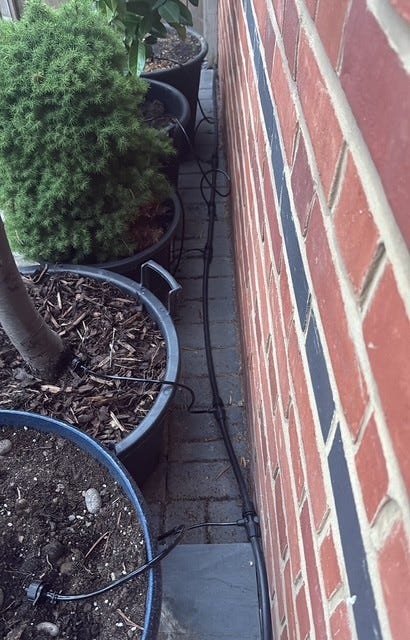
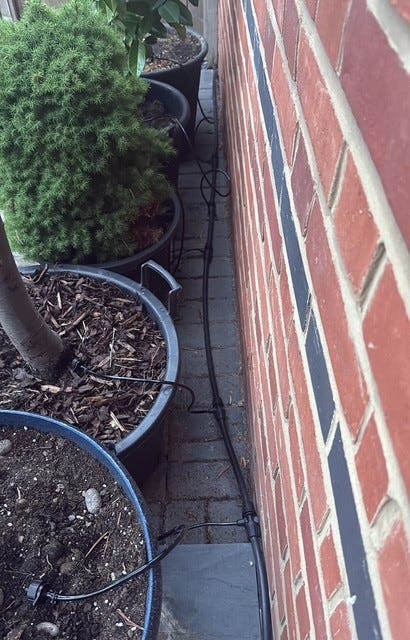
Mature trees in 25 litre pots, with timed irrigation installed
Monitoring and adjusting
Irrigation is not “set and forget”. Weather changes, trees grow, and pots, beds, and soil dry at different rates. Build a simple weekly routine:
Check moisture levels in a few representative pots, beds, and planted trees.
Inspect drippers for blockages or weak flow.
Look for leaks — wet patches usually give them away.
Adjust timers based on temperature and rainfall.
Clean filters if using rainwater or IBC storage.
For in‑ground trees, scrape back the surface: dry soil on top doesn’t always mean dry roots.
During heatwaves, increase watering frequency rather than duration. Short, regular watering keeps soil evenly moist without flushing nutrients out.
Common pitfalls to avoid
A few mistakes crop up repeatedly across school and community nurseries:
Assuming rain has watered pots or raised beds — the surface may look wet while the root zone is still dry.
Running too much pressure — this causes uneven watering or blown fittings.
Allowing algae to build up in tanks — it clogs drippers quickly.
Crowding pots together — touching pots dry unevenly; spaced pots dry more consistently.
Not planning for expansion — most nurseries grow; choose a system you can extend.
Watering in‑ground trees at the trunk — roots need moisture at the dripline, not the stem.
Letting raised beds form a hard crust — break the surface occasionally so water can penetrate.
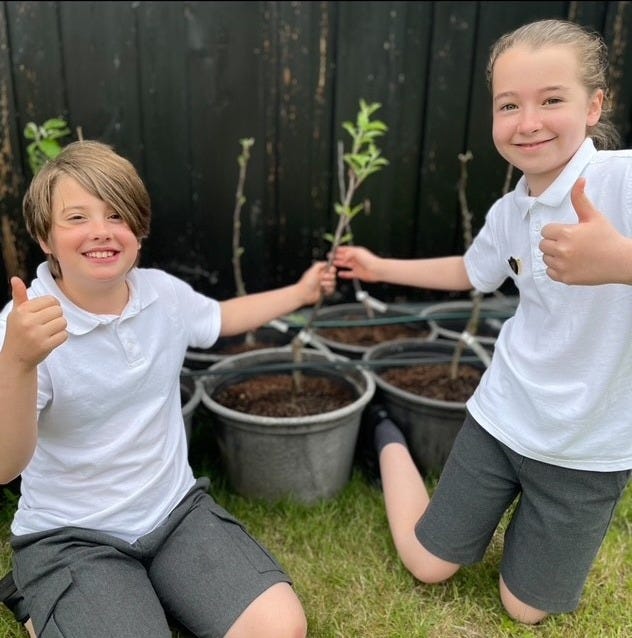
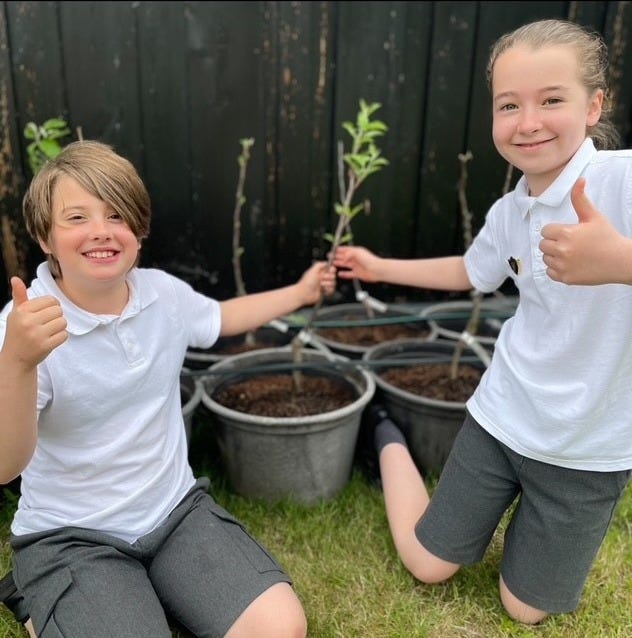
Shinfield St Mary’s Junior school pupils installing drip line irrigation for recently grafted fruit trees
Final thoughts
Irrigation isn’t glamorous, but it’s the backbone of successful tree growing. A thoughtful setup saves time, reduces losses, and keeps young trees resilient through unpredictable weather. Whether you’re caring for a handful of saplings, managing raised beds, or running a full community tree nursery, the principles stay the same: understand your water needs, choose the right system, install it well, and keep an eye on it.
With another warm spell likely on the horizon, now is the perfect moment to get your irrigation in order.
Find out more about The Tree Council’s Growing Together programme - supporting the development of community tree nurseries throughout the UK with thanks to M&Gplc for its kind support - by visiting www.treecouncil.org.uk/growing-together/
Matt Knight is Regional Lead for The Tree Council’s Growing Together programme
MORE: Tackling climate effects in London’s most impacted communities by Katie Rafferty
Find out more about The Tree Council at treecouncil.org.uk. Sign up to our monthly newsletter The Leaflet, and follow our social accounts: Instagram, TikTok, Facebook, LinkedIn, YouTube.