


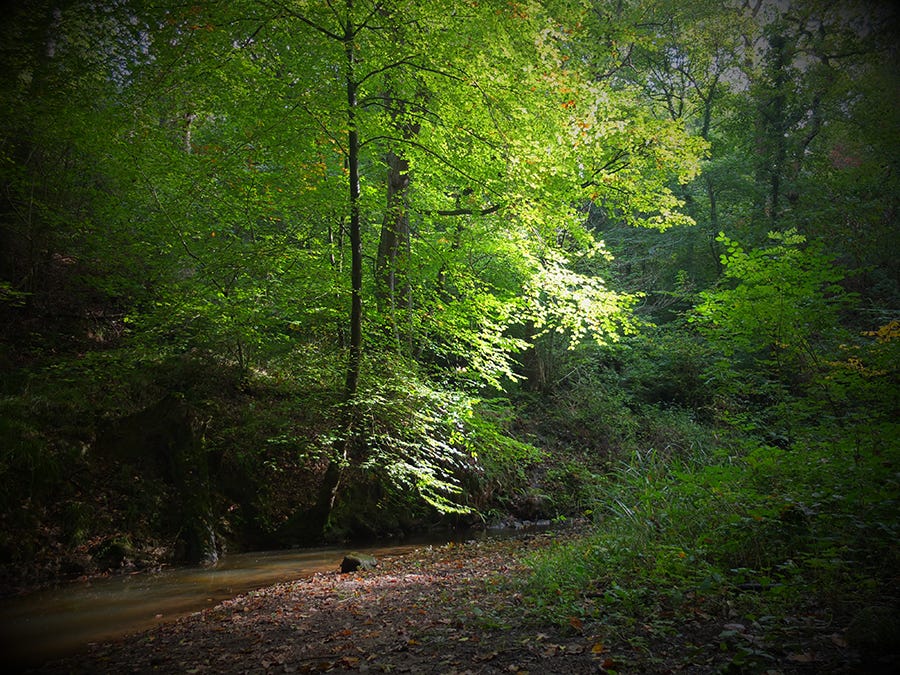
If you’ve been out and about over the past couple of weeks, you might have noticed one of the clearest natural signals of the seasons changing – the leaves of our trees turning colour. But why is it that some trees change the colour of their leaves and eventually lose them all each year, and how does this happen?
Firstly, not all trees lose their leaves every winter as some (like pines and yew trees) are evergreen. However, many of our trees across gardens, streets, fields and woodlands are deciduous and so will have bare branches for most of the winter. For a short time before they drop their leaves, we get to see the beautiful displays of fiery tones which are so symbolic of the autumn – but what is going on inside the leaves to produce this display?
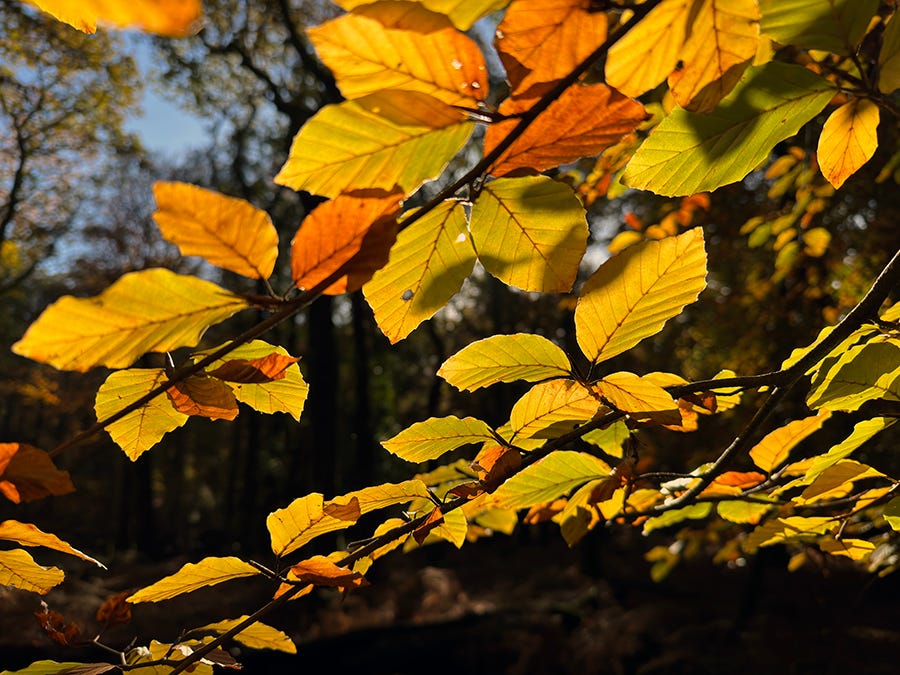
The colour of the leaves is determined by the presence of chemical compounds in the plant cells, called pigments. These compounds absorb certain wavelengths in the rainbow spectrum of white light but reflect others back to our eyes, and these reflected rays determine the colour that we see.
The most common pigment in plants leaves is chlorophyll, the main pigment involved in photosynthesis (the process by which plants produce sugars from water, carbon dioxide and the energy of sunlight). Because chlorophyll absorbs light wavelengths from the blue and red ends of the spectrum, but reflects back the wavelengths of the green section of the spectrum, chlorophyll appears green to us.
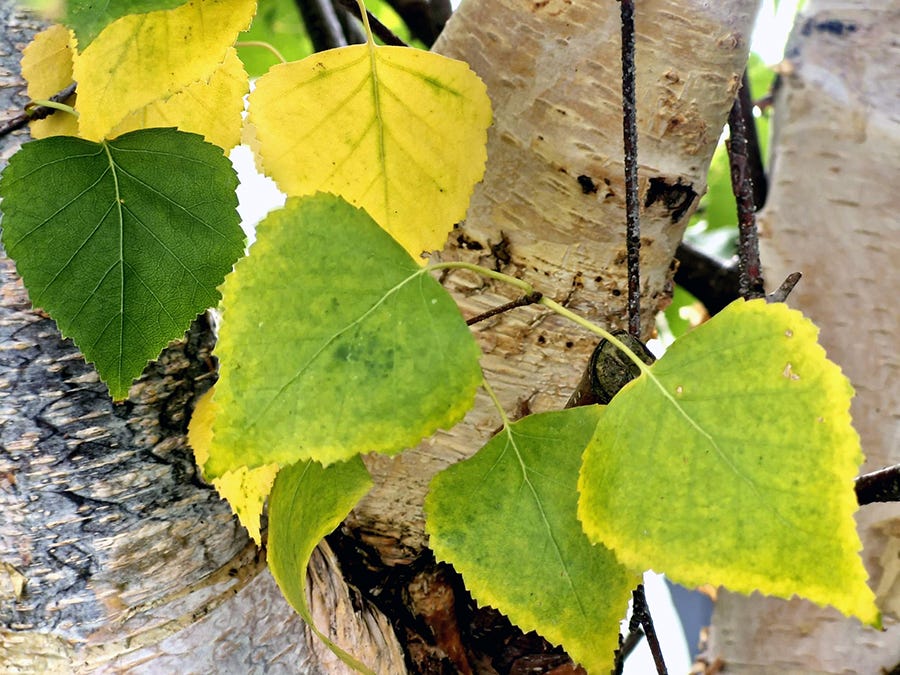
Alongside the chlorophyll are other pigments, which absorb different wavelengths of light, and so appear to be different colours. These are called carotenoids, and include xanthophylls (which we see as yellow) and carotenes (which we see as oranges and reds) – it’s a type of carotene which makes carrots orange!
Throughout the summer, while the trees are undertaking lots of photosynthesis, there is a lot of chlorophyll being produced in the leaves, and so the green colour is the only colour we see. However, once the seasons turn, the reduced sunlight and cooler night-time temperatures trigger this chlorophyll to be broken down and reabsorbed into the tree. As this happens, the colours of the other pigments are revealed, and so the leaves turn to oranges and yellows.
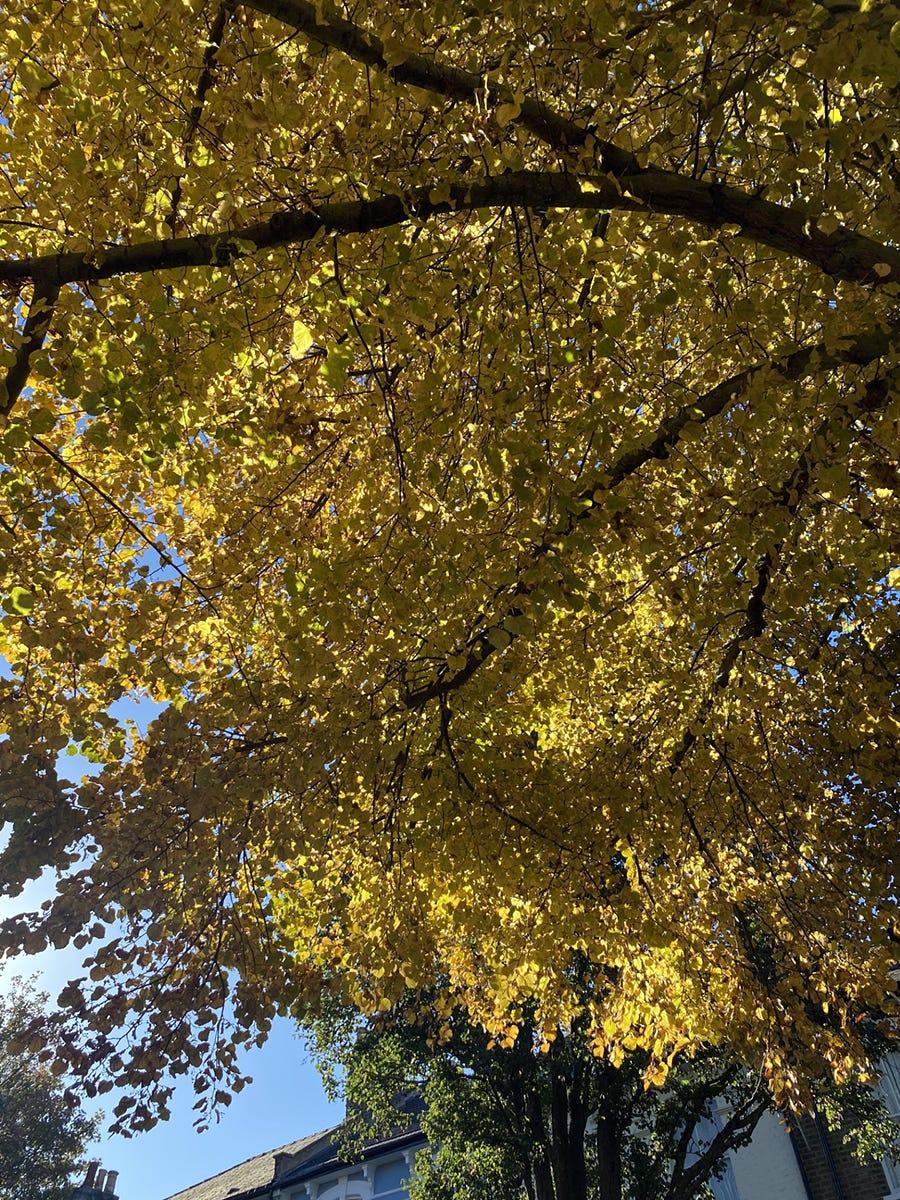
By breaking down the chlorophyll and other parts of the cell involved in photosynthesis into simpler compounds, the useful nutrients like nitrogen and phosphorous can be more easily absorbed back into the tree and stored in the branches and trunks through the winter, ready to be used for new growth in the spring.
While this process is responsible for the yellows and oranges we see during the autumn months, it doesn’t explain the vibrant reds we see on some tree species, such as maples. This is due to a slightly different mechanism, involving a red-purple pigment called anthocyanin. Unlike the other pigments mentioned previously, this is not present in the leaves all year round and is only produced in the autumn from excess sugars present in the leaves. Anthocyanin production is particularly high in cold bright conditions, as sunlight increases sugar production through photosynthesis.
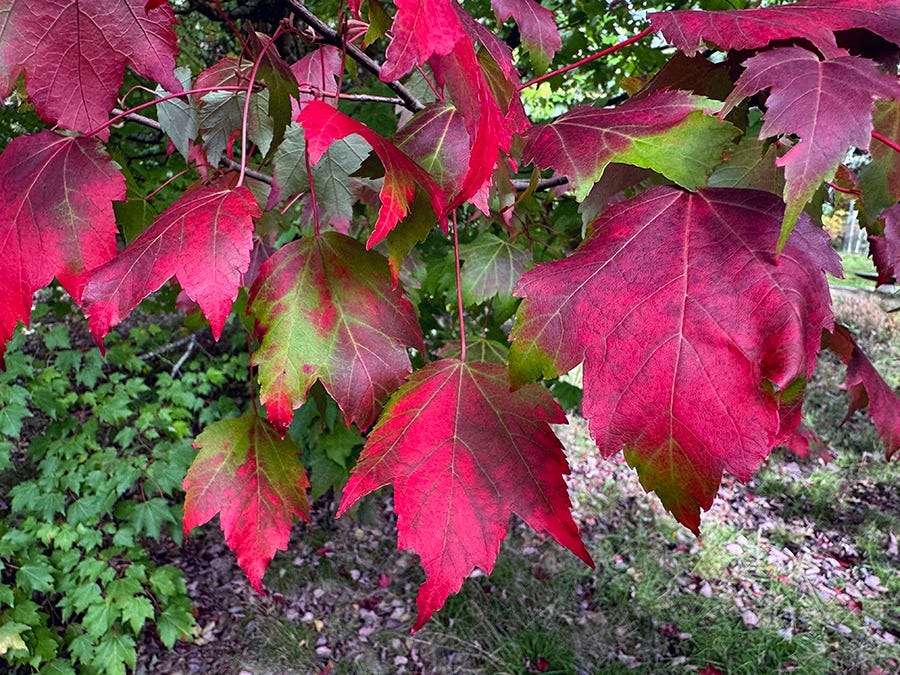
The reason for the production of these red pigments is still a subject of scientific debate, with multiple potential hypotheses existing. One of these is that the tree benefits at a cellular level, as anthocyanin is an antioxidant and therefore accumulation in the leaf can prevent cell damage while the chlorophyll is broken down. In addition, they absorb radiation in the UV spectrum and so can act as a sort of “sunscreen” and prevent damage to the leaf in this sense. Alternatively, it has been suggested that the red colour may act as a repellent to herbivores and other pests. Understanding this process remains an area of active research – for reviews of this debate, see Renner and Zonner (2019) and Lev-Yadun (2022).
While these colourful displays are stunning, they are also short-lived – once the leaves lose their chlorophyll and change colour, it is only a matter of time before they drop off. Once the tree has regained all the nutrients it can from the leaves, they no longer serve any purpose – particularly not their main function of providing sugar to the tree via photosynthesis.
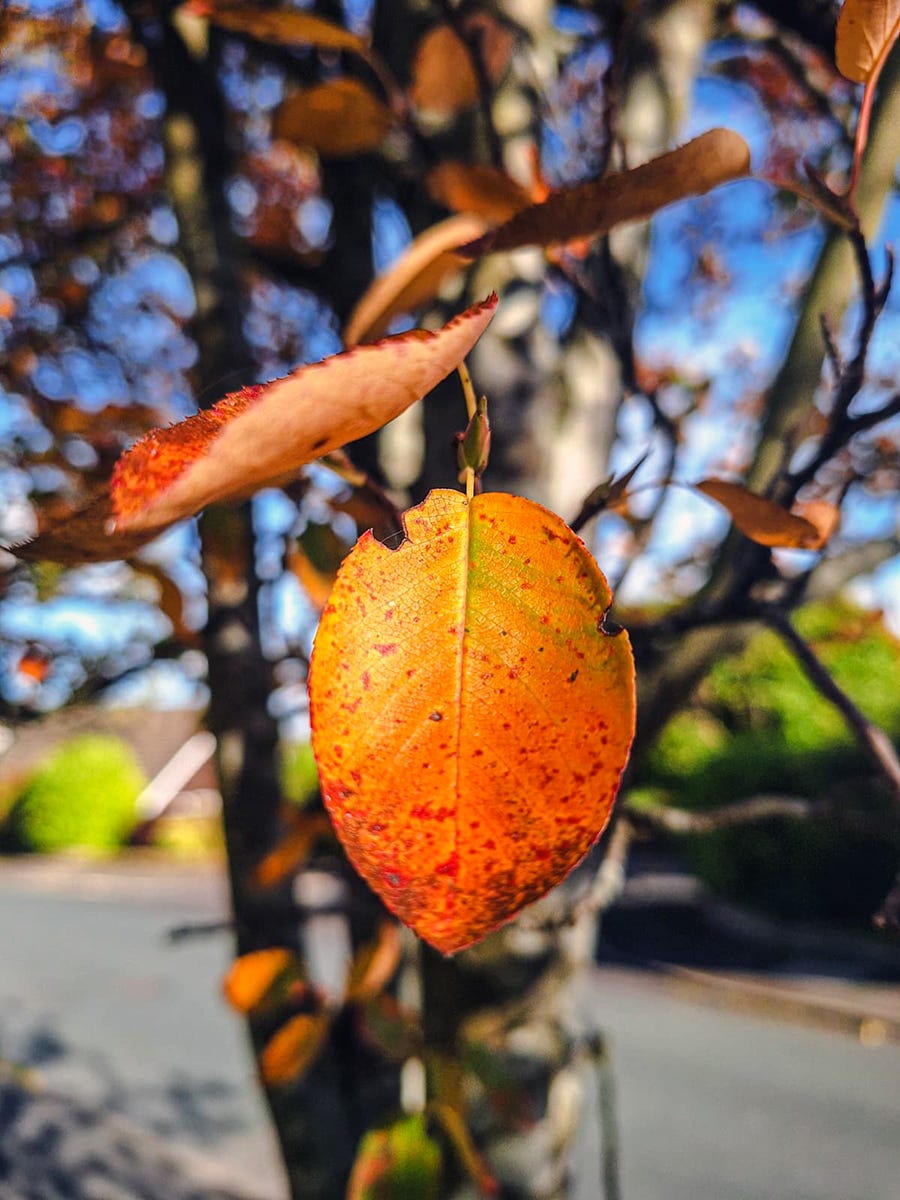
As a result, maintaining the leaves would be costly to the tree as they are a site of significant water loss, and also increase the likelihood of damage through winter storms and snowfall. Therefore, broadleaved deciduous trees have evolved to lose their leaves in the winter, through a process called abscission.
Normally, plant cells are very firmly stuck together by a layer called the middle lamella – scaled up this means that leaves are normally attached firmly to the branch. However, where the leaf joins onto the branch, there is a section of cells called the abscission zone. The seasonal cue of a shorter day length triggers a signalling cascade within the tree, controlled by plant hormones, particularly auxin and ethylene.
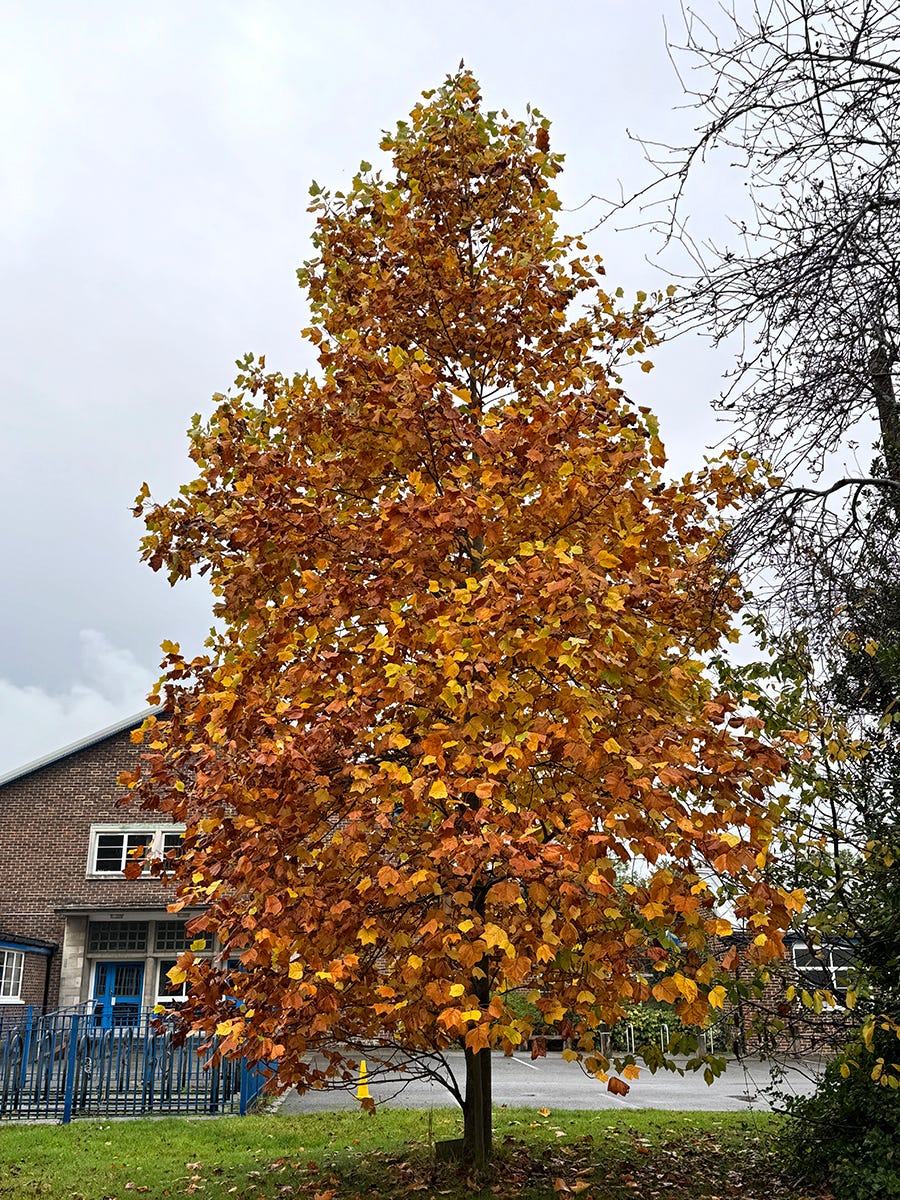
When the specialised cells in the abscission zone are exposed to ethylene, enzymes are produced and secreted which degrade the middle lamellae and the plant cell walls, allowing the plant cells layers to separate. The abscission zone is therefore weakened, leading to the leaves falling from the trees leaving only the bare branches we associate with winter.
So there you have it – the seasons changing and the autumnal leaves might be something we take for granted, but when you dig into the science, there’s a complicated process going on that we still don’t fully understand. While these chemical changes are too small for us to see, they result in the beautiful spectacle we all appreciate!
Charlotte Benham is The Tree Council’s Science & Action Research Manager
It’s Seed Gathering Season, and we still have one more free, online talk to join. Diary of a Seed Gatherer, featuring Forestart’s Robert Chapman and the Millennium Seed Bank’s Owen Blake, takes place on Thursday October 15 from 1-2pm. Secure your place here: www.tickettailor.com/events/thetreecouncil/2376512
Find out more about The Tree Council at treecouncil.org.uk. Sign up to our monthly newsletter The Leaflet, and follow our social accounts: Instagram, TikTok, Facebook, LinkedIn, X/Twitter, YouTube.
A fantastic explination on leaf biology its given me a much better understanding of the processes a leaf goes through in the autumn
It's been a while since I stopped by the Tree Talk. They sure delivered when they talked about my favorite season of the year.